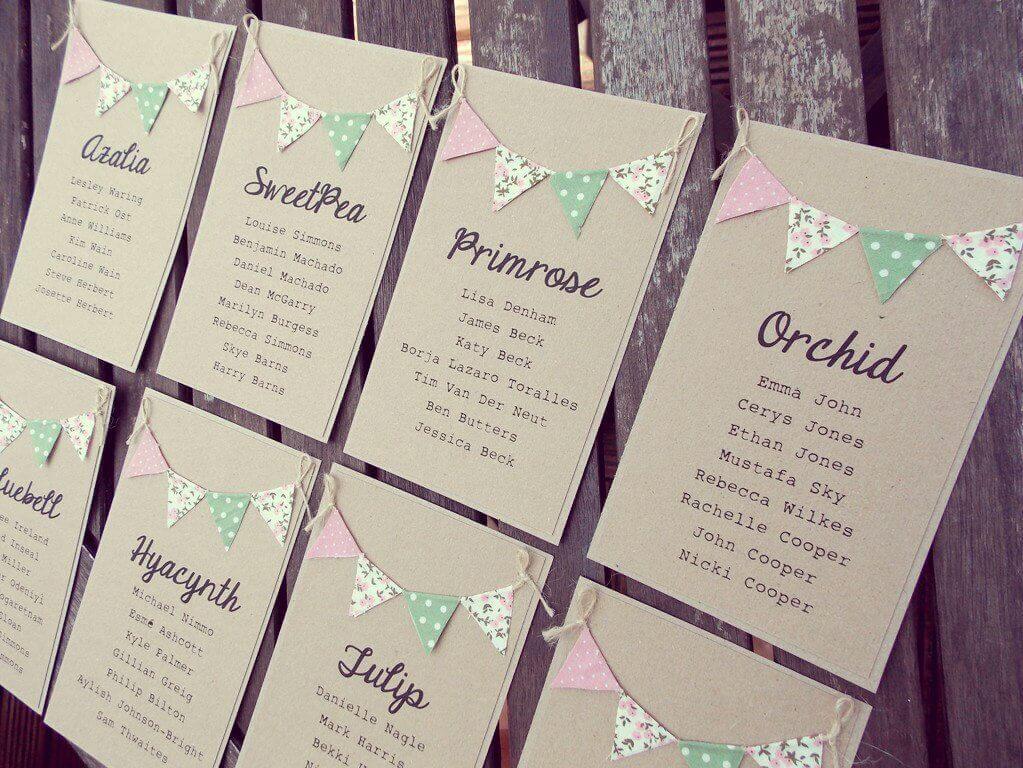

What is the most difficult thing to do if you are planning for your wedding day? Think! I am sure the most difficult thing you have to do is to prepare a guest list while organizing a wedding event. If you forget to add any guest’s name, then it might create a huge mess. So, you have to take care of every detail of the guest list and the details should never mess up. You should know the wedding guest list etiquette, so you can make the list properly without any mess. Your wedding list needs to be organized and well managed.
To do this task properly, so many software have been introduced until now, but the TopTablePlanner is the most popular one. You can organize your wedding day in a great, hassle-free way with the help of this app. You can easily plan your table designs, meal choice, seating plan, and guest list as well using this app.
However, now the question is: how you can prepare a wedding guest list without any error or how you can manage a wedding guest list? What is the most suitable way of making a wedding guest list? To answer all these questions, below are some tips that will help you to use this app in an effective manner.
The short answer, before the detail: set your ceiling first from two numbers, what you can afford and what your venue seats, then draft every household you can think of and sort the whole thing into A, B and C tiers. Fix your plus-one and children rules once and apply them to everyone. Chase addresses and both families’ lists months before you need them. Send save-the-dates six to eight months out, invitations six to eight weeks out, and keep one master sheet with a row per person.
Tips for Making Wedding Guest List
A guest list is not one decision, it is about six small ones, and the order matters: money and space first, names second, stationery third. Take them in that order and you will be quoting a rule you both agreed on rather than judging a person.
| Test | What it tells you | Where they go |
|---|---|---|
| You have spoken in the last twelve months | A current relationship | Keep |
| You would be genuinely hurt if they were not there | Non-negotiable | A tier |
| You would be glad to see them and would not mind if they declined | Flexible | B tier |
| You are adding them because a parent or colleague expects it | Obligation, not a guest | C tier, or cut |
| Married, engaged, living together, or together a year or more | Partner invited by name | Same tier as the guest |
| Part of a group you are already inviting | Cutting one person cuts the group | Apply the rule to the whole group |
Tier the list separately from your partner and then compare the two: comparing finished lists is a conversation, arguing name by name is a fight.
Step 1: Set the Ceiling Before You Write a Single Name
The quickest route to an unaffordable list is to write the names first and then go looking for a venue that fits them. Your ceiling is the smaller of two numbers: the most you can spend, and the seats the room genuinely holds once you take out the dance floor, the bar, the cake table and the top table. You should be able to afford that number if every person says yes.
The Knot’s 2026 Real Weddings Study puts the average cost per wedding guest at $292, with an average guest count of 117. Catering alone averages around $80 per person, which is why cutting twenty guests moves roughly five times as much money as downgrading the menu.
| Line | Per head | 80 guests | 117 guests | 150 guests |
|---|---|---|---|---|
| Food and service | $80 | $6,400 | $9,360 | $12,000 |
| Bar | $24 | $1,920 | $2,808 | $3,600 |
| Rentals, linen, place settings | $17 | $1,360 | $1,989 | $2,550 |
| Cake and desserts | $5 | $400 | $585 | $750 |
| Invitations, postage, favors | $8 | $640 | $936 | $1,200 |
| Variable subtotal | $134 | $10,720 | $15,678 | $20,100 |
| Fixed costs (venue, photography, flowers, music) | — | $18,500 | $18,500 | $18,500 |
| Total / cost per head | — | $29,220 / $365 | $34,178 / $292 | $38,600 / $257 |
Use your own quotes in place of these figures, but keep the shape: the fixed lines do not grow with the list, so a smaller wedding is not automatically cheaper. Ask every caterer for an all-in per-head number before you compare them.
Step 2: Draft by Household, Then Count by Person
Invitations go to households, so draft by household and count by person: your print order and address collection are household counts, while your catering and seating numbers are head counts. How many accept depends almost entirely on travel distance.
| Guest type | Share that usually attends |
|---|---|
| Local, in the same city as the venue | 80–85% |
| Out-of-town, a drive plus a hotel night | around 55% |
| Destination, a flight and a stay | 35–50% |
Do not treat the decline rate as permission to over-invite. Invite to a number you could seat and feed if every household accepted.
Step 3: Sort Everyone Into an A, B and C List
Tiering is how you cut a list that is too long without it becoming a series of personal rejections.
| Tier | Who belongs here | When they hear from you |
|---|---|---|
| A | Immediate family, wedding party, closest friends | First wave, with the earliest RSVP deadline |
| B | Extended family, close colleagues, friend groups you see regularly | As A-list declines arrive, no later than six weeks out |
| C | Distant relatives, your parents’ friends, acquaintances | Only if space opens up late |
Order the B tier by priority so you always know the next ten names, and give the later wave its own RSVP deadline so those guests get the same response window. Keep the tiers between the two of you — a guest who learns they were second choice will remember it.
Step 4: Wedding Guest Excel List
With the help of MS Excel, you can prepare your guest list and at the end, you can add all the number of guests that are going to attend your wedding. This is the most sophisticated way of making the wedding guest list. And at the end by adding the number of guests, you will get an idea of how many people are going to attend your wedding and you can plan other things according to this estimate as well. Further, you can add member in the list whenever a new name pops up in your mind.
A spreadsheet is still the right home for that running total. Build it with one row per person rather than one row per couple, so you never recount by hand to get a head count or a children’s meal total. Add a tier column and use filters so dietary flags, pending replies and missing addresses stand out.
Worth having from the start: first and last name plus the envelope name; household; side; tier; full postal address, email and phone; plus-one allowed and plus-one name; invitation and save-the-date sent dates; RSVP status; adults and children counted separately; meal choice and dietary notes; table or seating group; gift received and thank-you sent.
Step 5: Wedding Guest List Flow Chart
You can make a flow chart of the wedding guest list by linking family members. And if you want to make such a flow chart, the TopTablePlanner will help you to do this task easily. You will add the number of guests and details to make a flow chart in this software.
A family-linked chart earns its keep at the seating stage, where list decisions become physical: once you can see which branches of the family cannot share a table, the floor plan stops being guesswork.
Step 6: Wedding Guest List Organizer
With the TopTablePlanner, you can organize your wedding guest list accordingly and it depends on you whether you want to organize it in an excel file or you want to make a flow chart of the guest list.
Above we have discussed some solutions which will help you to make your guest list. So, we are sure, with the help of the TopTablePlanner, your data will be saved online and you can get a print of it as well when it is prepared. And even after getting a print, you can save it, so if accidentally you lost the printed version at least you have a backup of that wedding guest list. Making a wedding guest list on a paper will always create a mess, that’s why the TopTablePlanner software will help you in this task without creating any mess!
Keep that backup habit whatever you use. A spreadsheet in a cloud drive gives you version history and two-person editing from a phone; a paid seating tool adds drag-and-drop tables, meal totals and printable place cards. Print a copy the week of the wedding and put it in the day-of folder.
Step 7: Collect Addresses and Ask Both Sides for Their List Early
Address collection is the task couples most consistently underestimate: people move, people promise to send it later and do not. Start as soon as the venue is booked and ask for the same fields every time — full name as it should appear on the envelope, street, city, postcode, email and phone.
Give the parental list a number and a deadline rather than an open invitation to keep adding names:
- Allocate each set of parents a fixed number of seats.
- Ask for their names by a set date, in the same spreadsheet format you are using.
- Say plainly that the two of you approve the final combined list.
- If parents are contributing financially, say up front that their allocation is larger.
A late request to add a few more names is far harder to handle once invitations are printed, which is the whole reason to have this conversation in month one.
Step 8: Fix Your Plus-One and Children Rules in Writing
Decide both policies before a single envelope is addressed, and apply them without exceptions. Most guest-list disputes come from case-by-case decisions rather than from the rule itself.
| Situation | Common rule |
|---|---|
| Married, engaged or living together | Partner invited by name, always |
| Long-term relationship, roughly a year or more | Partner invited by name |
| Casual or recent relationship | No plus-one by default |
| Wedding party members | Plus-one, even if single |
| Guest who will know nobody else | Plus-one, as a kindness |
| Children of immediate family and the wedding party | Usually invited |
| Other children | All, ceremony only, or none — your call |
Addressing does most of the communication: write the names you are inviting on the envelope, use the partner’s name when you know it, and reserve “and Guest” for cases where you genuinely do not. For an adults-only reception, name only the adults and add one gentle line to the details card or website, such as “we respectfully request an adults-only evening”. Tell close family early so they can arrange childcare, and fill in the plus-one name column from day one — an unnamed plus-one is a seat you cannot plan a meal for.
Step 9: Send Save-the-Dates and Invitations on the Right Timeline
Save-the-dates and invitations do different jobs. The save-the-date reserves the day and carries four facts: your names, the date, the city or country, and a line saying the invitation will follow. It never asks for a reply, because there is nothing to reply to yet. The invitation carries the venues, times, dress code and RSVP method — and it is what generates your headcount.
| Milestone | Local wedding | Destination wedding |
|---|---|---|
| Save-the-date | 6–8 months before | 8–12 months before |
| Invitations | 6–8 weeks before | 10–12 weeks before |
| RSVP deadline | 3–4 weeks before | Around 6 weeks before |
| Final count to caterer and venue | 1 week after the deadline | 1 week after the deadline |
With a tiered list, move the invitation date earlier: the A-list must reply before the B-list goes out, and both must reply before your caterer’s guarantee date. If your engagement is shorter than about four months, skip the save-the-date and send one invitation at the early end of the window.
Step 10: Track RSVPs, Meals and Plus-One Names in One Place
Ask for more than yes or no: attendance for each event, meal choice, dietary restrictions, accessibility or transport needs, and the plus-one’s name. Put the deadline on the invitation itself, not only on the website, and set a firm follow-up date one week after it passes.
| Tool | Cost | Best at | Watch out for |
|---|---|---|---|
| The Knot | Free tier | Guest list, website and registry together | Heavy advertising, US-centric |
| Zola | Δωρεάν | All-in-one planning with seating export | Constant vendor promotion |
| With Joy | Free tier | Multi-event RSVP logic, household grouping | Fewer design options |
| Paperless Post | From about $1 per invitation | Beautiful digital design | Cost climbs on a long list |
| Google Forms with Sheets | Δωρεάν | Custom questions, automatic tallies | No built-in reminders |
| TopTablePlanner | Paid | Seating plan, meal totals, Excel import, place cards | Built around the table plan |
A dedicated platform starts to earn its fee somewhere above fifty guests, mostly in the hours saved on chasing. A Google Form linked to a Sheet is sufficient for a smaller, spreadsheet-comfortable couple if you add a confirmation step so guests do not submit twice. For guests over about sixty-five, mail a card with a stamped return envelope and type the reply into the same sheet the day it arrives.
Συχνές ερωτήσεις
1. How many people should I invite to my wedding?
Work backwards from what you can seat and afford. Take your venue’s real capacity, take the headcount your budget survives if everyone accepts, and use whichever is smaller.
2. What percentage of invited guests actually attend?
Plan on 80–85% for local guests, around 55% for out-of-town guests who need a hotel, and 35–50% for a destination wedding — but budget on the assumption that everyone might come.
3. Is it rude to invite people in waves?
No, as long as the later wave goes out early enough that the timing looks normal: at least six weeks before the day, with its own RSVP deadline.
4. Do I have to give every single guest a plus-one?
No. The usual rule covers anyone married, engaged, cohabiting or together a year or more, plus wedding party members and guests who would otherwise know nobody.
5. How do I tell guests that children are not invited?
Put only the adults’ names on the envelope and add one clear line to the details card or website, such as “we respectfully request an adults-only evening”. Tell close family early.
6. When should save-the-dates go out?
Six to eight months before a local wedding, eight to twelve months before a destination wedding or a holiday weekend. Invitations follow six to eight weeks out, or ten to twelve weeks for a destination event.
7. What do I do about guests who never reply?
Chase them a week before the deadline, then again just after. A phone call beats a text at that stage, and if you still have nothing a week later, count them as a no for catering.
8. Should I ask parents for their guest list?
Yes, and early. Give each side a fixed number of seats and a deadline in your own spreadsheet format, and be clear that you and your partner approve the final list.
Σύναψη
A guest list is difficult because money, relationships and arithmetic collide at the same time. The way through is to take the decisions in a fixed order and refuse to skip ahead. Set the ceiling from your budget and venue before any names exist, and every later argument becomes a question of whether a name fits inside a number you already agreed on. Draft by household, count by person, and tier everyone into A, B and C before removing a single name.
Decide plus-ones and children once, write both rules at the top of the sheet, and let the envelope wording communicate them. Chase addresses and your parents’ lists in the first month rather than the last, since that job always overruns and it is the one that can hold up printing. Then hold the timeline: save-the-dates six to eight months out, invitations six to eight weeks out, an RSVP deadline three to four weeks before the day, and a firm follow-up a week after it passes.
Keep everything in one master sheet with a row per person and a column for every fact you will need later. Do that and the guest list stops being the hardest part of planning and becomes the document everything else — seating, catering numbers, place cards and thank-you notes — is built from.
Πόσο χρήσιμη ήταν αυτή η ανάρτηση;
Κάντε κλικ σε ένα αστέρι για να το αξιολογήσετε!
Μέση βαθμολογία / 5. Καταμέτρηση ψήφων: